
 Native Phrase Lab
 Willowbrook
The Library · 59 lessons · 26 free
Pick a lesson.
Short, practical, and about the English people actually use. Start with the sounds if you’re new here. Everything else gets easier once you can hear them.
Not sure of your level? Start at A2. Every lesson explains things in simple English, whatever its level. Click or double-click any word to see it in your own language.
Need to say one word right, fast? See how to pronounce 100 tricky words, with my recordings.
Nothing matches that. Try a shorter word.
 Free01
Mastering the Schwa /ə/
Unlock the secret to natural English rhythm by mastering its most common and important vowel sound. This lesson will transform your pronunciation and listening skills.
Read the lesson →A2 Free02
English for Air Travel
Navigate airports and airplanes with confidence. Learn essential vocabulary for check-in, security, and communicating with flight attendants.
Read the lesson →B1 Free03
Talking about Movies & TV
Go beyond "It was good". Learn to describe plots, genres, and give detailed opinions on your favorite shows and films.
Read the lesson →A2 Free04
Daily Routines & Frequency
A beginner-friendly guide to talking about your day. Learn to use the present simple tense and adverbs like "always", "usually", and "never" correctly.
Read the lesson →A2 Free05
Describing People: Looks & Personality
Learn the difference between "be" and "have" when describing someone. Build your vocabulary for physical appearance and character traits.
Read the lesson →B1 Free06
Mastering Small Talk
Never feel awkward in silence again. Learn the "FORD" technique, polite openers, and how to exit a conversation gracefully.
Read the lesson →B1 Free07
The Art of Active Listening
Communication isn't just about speaking. Learn how to show you are engaged, ask clarification questions, and "listen" like a native.
Read the lesson →B1 Free08
The Silent Letters of English
Why do we write "knife" but say "nife"? Master the rules for silent K, B, W, G, and L to perfect your spelling and pronunciation.
Read the lesson →B1 Free09
Telephone English Mastery
Conquer your fear of speaking on the phone. Learn essential phrasal verbs and polite phrases for answering, connecting, and taking messages.
Read the lesson →B2 Free10
The Magic of Connected Speech
Ever wonder why native speakers talk so fast? The secret is connected speech. Learn how words link together to create the natural rhythm of English.
Read the lesson →B1 Free11
Intonation: The Music of English
Learn how the rise and fall of your voice can completely change a sentence's meaning. Master the 'music' of English to sound more natural and engaging.
Read the lesson →B1 Free12
Mastering Phrasal Verbs
Stop sounding like a textbook and start sounding like a native. Learn what phrasal verbs are, why they are essential, and how to use them confidently in conversation.
Read the lesson →B1 Free13
Beyond 'Very': Using Stronger Adjectives
Take your vocabulary to the next level. Learn to replace common, weak adjectives with powerful, descriptive words to make your English more vivid and impressive.
Read the lesson →B1 Free14
Common Mistakes in English
Learn to identify and correct the most common errors made by English learners. Fixing these small mistakes can make a big difference to your fluency.
Read the lesson →A2 Free15
A, An, The: Mastering English Articles
These tiny words can be tricky! This lesson simplifies the rules for 'a', 'an', and 'the', helping you use them correctly and confidently every time.
Read the lesson →B1 Free16
Time Travel with Tenses: The Past Perfect
The past perfect isn't as scary as it sounds! Learn how to use this 'past before the past' tense to tell stories and explain events with perfect clarity.
Read the lesson →B1 Free17
Present Perfect vs. Past Simple
Finally master the difference between these two tricky past tenses. Learn when to use each one correctly to talk about your experiences and tell stories.
Read the lesson →B1 Free18
Stop Saying 'I Think': Expressing Opinions
Upgrade your conversational skills by learning over 10 different ways to express your opinion, from formal and confident to casual and hesitant.
Read the lesson →B2 Free19
I Wish vs. I Hope: Expressing Desires
Learn the crucial difference between wishing for the impossible and hoping for the possible to make your English more precise and natural.
Read the lesson →B1 Free20
Used To, Be Used To, Get Used To
Master the difference between these three commonly confused phrases to talk about past habits, current familiarity, and the process of adaptation.
Read the lesson →B1 Free21
Question Tags: Sound More Natural
Learn how to use question tags (isn't it?, don't you?) to confirm information and make your conversations more engaging and fluent.
Read the lesson →A2 Free22
Food: Would You Eat That?
Food words, a, an or some, a cup of and a slice of, tastes, and ordering in a café. With games, every example in James's voice, and translations in 21 languages.
Read the lesson →A2 Free23
Prepositions of Time (In, On, At)
Master the simple rules for using 'in', 'on', and 'at' to talk about time, dates, and schedules with perfect accuracy.
Read the lesson →A2 Free24
Pronouncing -ed Endings: /t/, /d/, /ɪd/
A crucial pronunciation lesson that explains the three simple rules for correctly pronouncing the '-ed' ending on past tense verbs.
Read the lesson →A2 Free25
Making Comparisons: Comparatives & Superlatives
Learn how to compare two or more things using '-er', '-est', 'more', and 'most'. This lesson also covers common irregular adjectives.
Read the lesson →A2 Free26
Prepositions of Place (In, On, At)
Complementing our time prepositions lesson, this guide uses a simple pyramid to teach you how to use 'in', 'on', and 'at' for locations.
Read the lesson →B2 Premium27
The Art of Persuasion & Negotiation
A request that steps back is easier to say yes to. How to ask, disagree and talk about money in English, and the six mistakes I see most.
Unlock and read →B2 Premium28
English for Introverts: The Quiet Power
Being quiet isn’t the problem. In English, people guess what your silence means, and they often guess wrong. Short phrases to label a silence, say no kindly, and leave a party.
Unlock and read →B1 Premium29
Shopping Mastery: Fit, Suit & Style
Fit is about size. Suit is about how you look. Learn the difference, plus the words you need to try clothes on and get your money back.
Unlock and read →B1 Premium30
Health Essentials: Doctors & Body
Ache, pain or hurt? Learn the two ways to say what’s wrong, the body words you need, and what to say at a British doctor’s and chemist.
Unlock and read →B2 Premium31
The Fluency Blueprint: Master Pronunciation & Speak Naturally
Fluency isn’t speed. English has a beat, and the small words get squeezed between the beats. Learn word stress, sentence stress, weak forms, and why “next week” has no t.
Unlock and read →B2 Premium32
The Ultimate Guide to the Schwa /ə/
The schwa /ə/ is the most common sound in English. Learn where it is, where it disappears, and where you must not use it.
Unlock and read →B1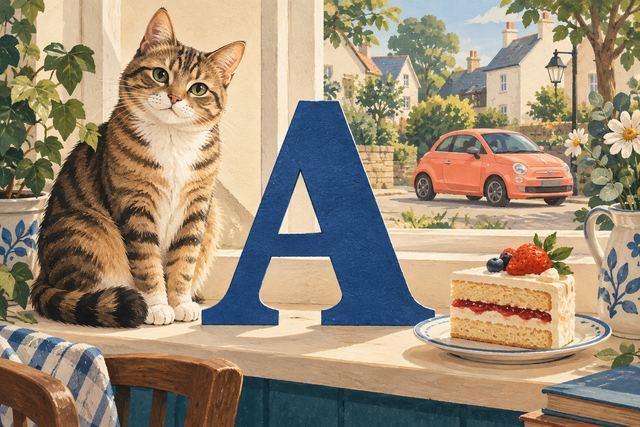 Premium33
Decoding the Letter 'A': All Its Sounds in English
The letter a has nine sounds in English. Learn how to know which one is coming, how to make each sound, and the mistakes learners make most.
Unlock and read →B1 Premium34
Decoding the Letter 'E': All Its Sounds in English
E is the most common letter in English. Sometimes it makes a sound, and sometimes it is a silent signal. Learn every sound, the silent e, and the -ed ending.
Unlock and read →B1 Premium35
Decoding the Letter 'I': All Its Sounds in English
The letter i has no fixed sound. Its syllable decides: what closes it, and whether it is stressed. Five sounds, two questions, and the mistakes learners make most.
Unlock and read →B2 Premium36
Mastering Business Emails & Professional Communication
Polite English leaves the reader space to say no. How to write work emails that are clear and kind, and the six mistakes I see most.
Unlock and read →C1 Premium37
The Subjunctive Mood: Formal English Mastery
The subjunctive is the verb English uses for an order, not a fact. Learn the one question that decides it, and what British English really allows.
Unlock and read →B2 Premium38
Advanced Pronunciation: Tricky Clusters & Silent Letters
When English has too many consonants together, it takes a sound out. It never adds a vowel. Learn clusters, silent letters, and the mistakes that change your meaning.
Unlock and read →B2 Premium39
Mastering Time & Money Idioms
English uses the same verbs for time and money: spend, save, waste. Learn the idioms British people really say, and the small mistakes that make English sound translated.
Unlock and read →B2 Premium40
Present Perfect Continuous vs. Simple
Do you want to show the result, or the activity? That one question chooses the form. Plus the verbs that don’t go continuous, and why “since twenty minutes” is wrong.
Unlock and read →B1 Premium41
British vs. American English
British and American English are one language with a switch. Learn the spelling patterns, the words that change meaning, and why mixing the two is the only real mistake.
Unlock and read →B1 Premium42
Mastering Prepositions of Movement
Each word for movement draws a line, like a line on a map. Learn the shapes, and the mistakes I hear most, like “I arrived to the airport”.
Unlock and read →C1 Premium43
Advanced Future Forms: Perfect & Continuous
Choose a moment in the future, stand in it, and look around. That one idea gives you all three forms. Plus why “I’ll be knowing” isn’t English.
Unlock and read →B2 Premium44
Causal Connectors & Reason: Advanced Linking
Because, due to, since and therefore all give a reason. You choose between them by looking at the words that come after them.
Unlock and read →B2 Premium45
Mastering Reported Speech
Someone said it in another place, on another day. To report it, you change the words that now point at the wrong thing, and leave the rest alone.
Unlock and read →B2 Premium46
Mastering Conditionals (If-Clauses)
Four conditionals, one idea: move the verb back, and the sentence moves away from real. Then the five mistakes I see most, and how to fix them.
Unlock and read →B2 Premium47
The Power of the Passive Voice
The passive lets you choose what a sentence is about. Learn how to build it, when to use it, and how to fix the most common mistakes.
Unlock and read →C1 Premium48
Advanced Phrasal Verbs: Deep Dive
You know what most phrasal verbs mean. The hard part is where the object goes. One small test answers that question almost every time.
Unlock and read →C1 Premium49
Mastering Inversion for Emphasis
Put a negative word like never at the front, and the rest of the sentence takes question order. One idea for every type of inversion, and the mistakes my students really make.
Unlock and read →B2 Premium50
Nuances of Modal Verbs
“You must be tired” is a guess. “You must sign here” is a push. The two jobs of every modal verb, why the negatives don’t match, and the mistakes I see most.
Unlock and read →C1 Premium51
Advanced Conditionals: Mixed & Inverted
Mixed conditionals use the idea behind every conditional: one step back is one step away from real. Then three words that let you make a conditional with no ‘if’.
Unlock and read →C1 Premium52
Articles Deep Dive: The & Zero Article Nuances
Articles are about one question: does the listener already know which one you mean? Here is that idea, the tests you can use, and the mistakes I see most.
Unlock and read →B2 Premium53
Collocations: The Secret to Sounding Natural
We say heavy rain but strong coffee, and there is no rule for it. Learn which words go together, the five verbs that cause most mistakes, and a simple way to collect word partners.
Unlock and read →C1 Premium54
Advanced Passive Voice: Causatives & Agent Focus
Use the passive to choose what goes first and what goes last. Learn “have it done”, “It is said that…”, and how to fix the most common mistakes.
Unlock and read →B2 Premium55
Mastering Relative Clauses: Defining vs. Non-Defining
Two commas can change how many brothers you have. Learn when to use commas, who, which, that and whose, and how to fix the most common mistakes.
Unlock and read →C1 Premium56
Conditionals for Wishes & Regrets
Wishes, regrets and conditionals use one idea: move the verb one step back, and it means “this isn’t true”. Plus why “I wish you have a good trip” is wrong.
Unlock and read →C1 Premium57
Figurative Language: Metaphors & Similes
A comparison gives one quality from one thing to another. Learn similes and metaphors, the ones English uses every day, and the small mistakes I see most.
Unlock and read →C1 Premium58
Adding Emphasis: Cleft Sentences
When you speak, your voice can make one word strong. When you write, a cleft sentence does that job. The two main types, and the seven mistakes I see most.
Unlock and read →C1 Premium59
Connecting Ideas: Mastering Discourse Markers
A linking word is a sign: it tells the reader what type of sentence comes next. Learn the four signs, why a comma can’t join two sentences with “however”, and the pairs that confuse almost everyone.
Unlock and read →